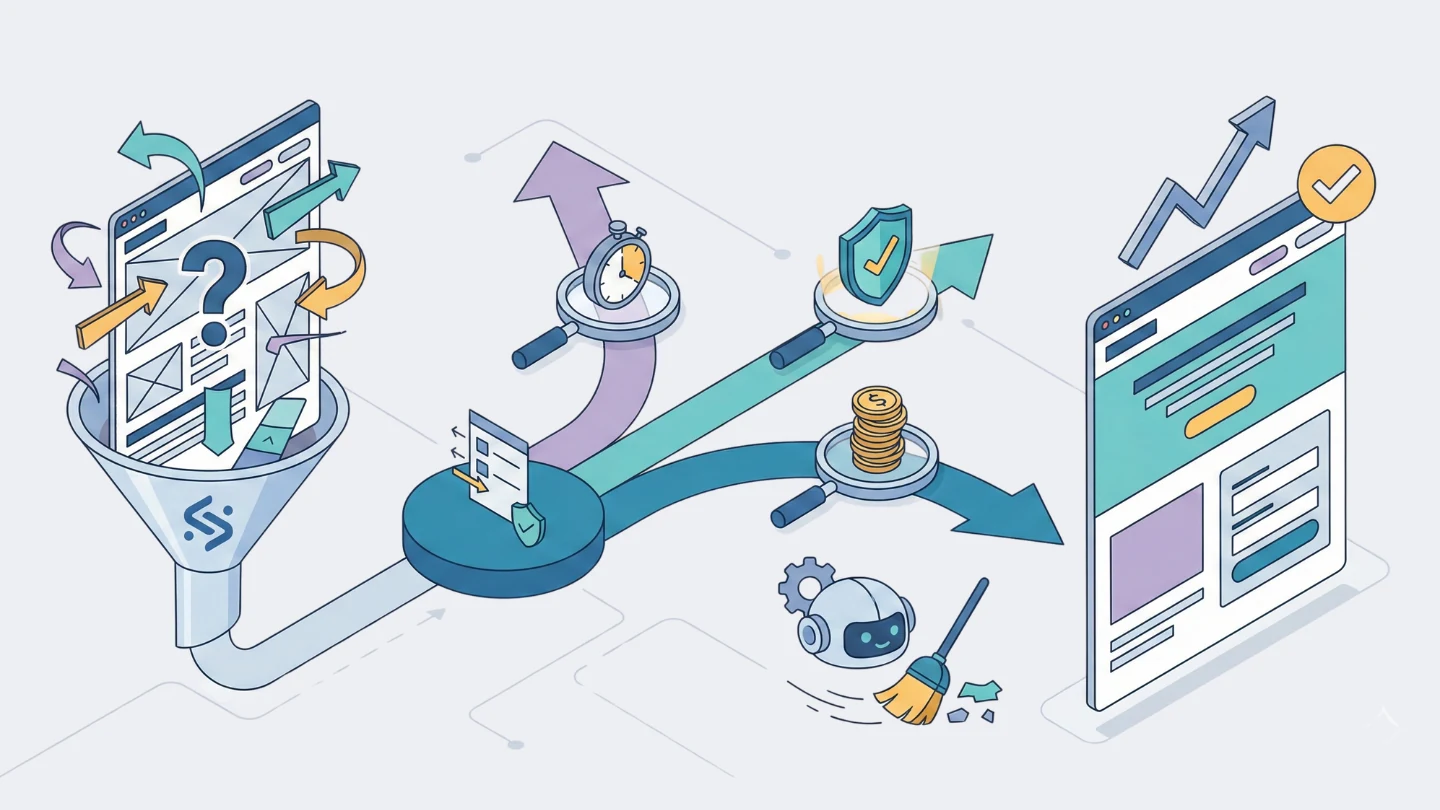
Designing automated routing meant dealing with messy inputs and real operational nuance.
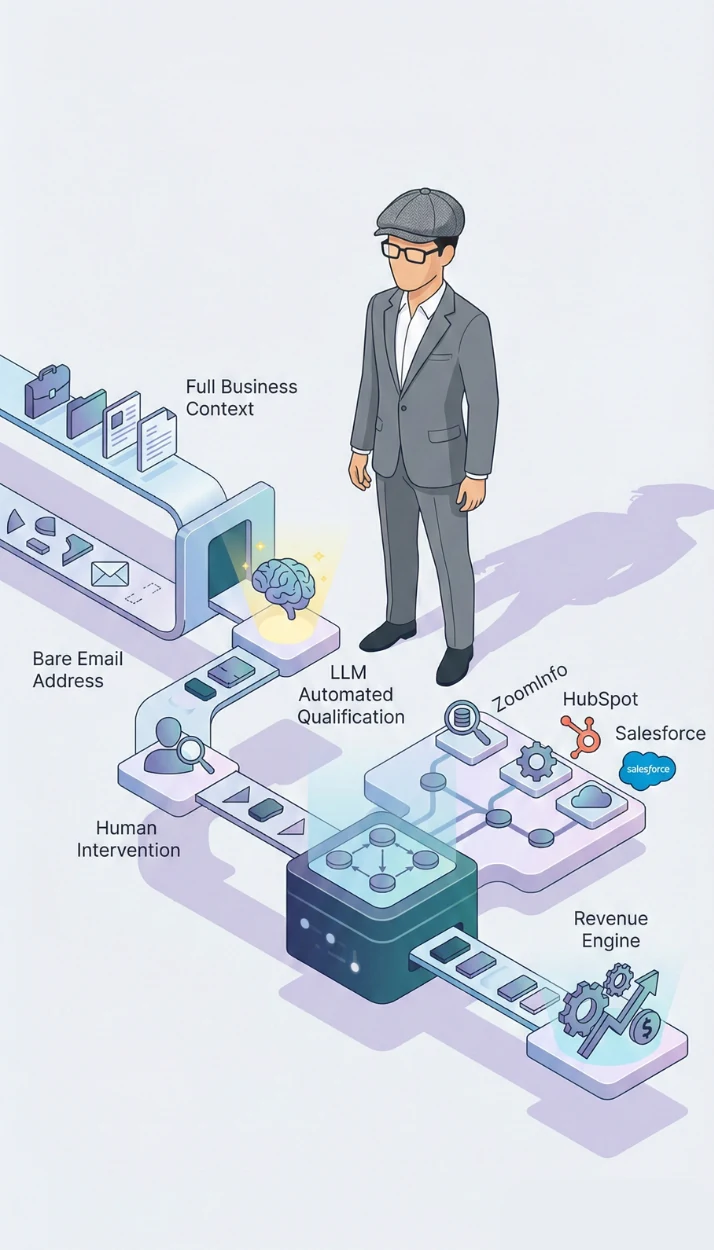
Lead quality varied by region, segment, and funnel. Some records arrived with rich business context; others had only an email address and a vague note. Compliance requirements meant the system also had to know when AI could assist and when a human should step in.
On top of that, the workflow had to combine enrichment data from ZoomInfo and engagement signals from HubSpot, then feed clean outputs into Salesforce and a homegrown CRM. This could not be a shallow AI wrapper. It had to become a judgment layer the broader revenue engine could trust.
This system worked because it was designed around operational reality, not just AI capability.
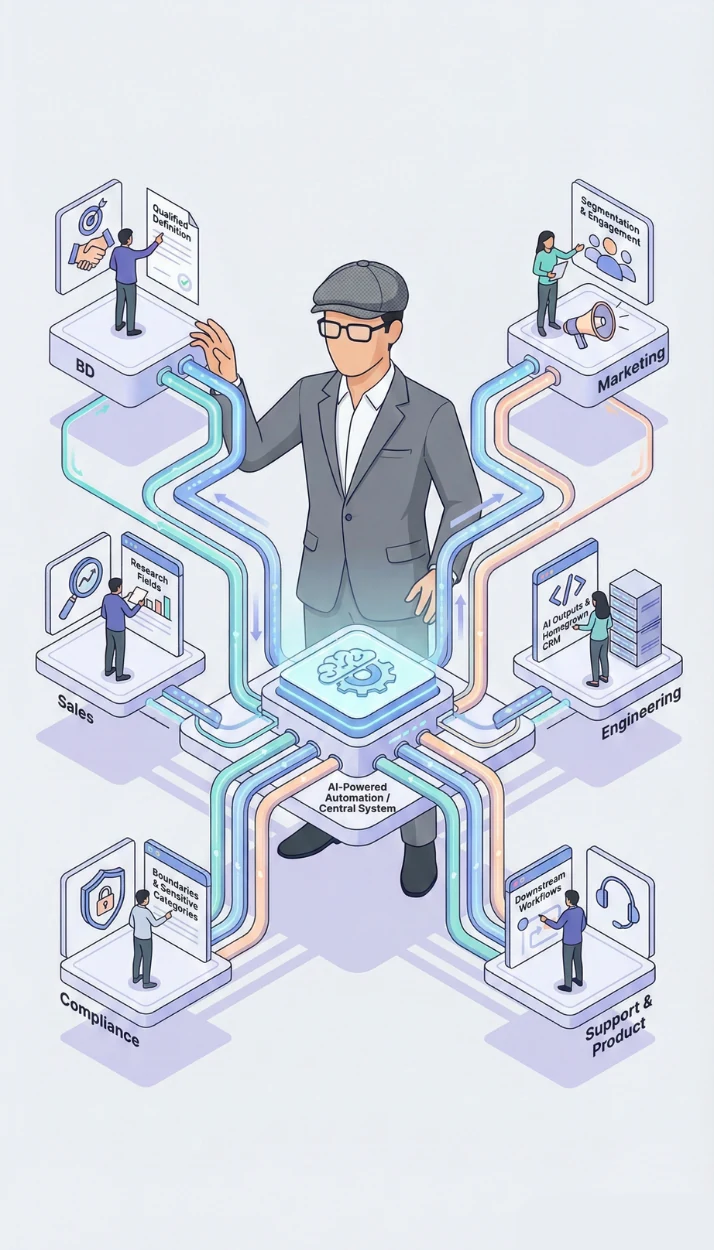
I worked with BD to define what “qualified” meant across regions, with sales to identify the fields they repeatedly needed, with marketing to align segmentation and lifecycle logic, with engineering to connect AI outputs to internal CRM models, and with compliance to draw boundaries around sensitive cases.
The result was not an AI project in isolation. It was a routing and qualification system shaped by the needs of every team downstream.
To solve the problem, I designed an AI vetting engine as the first layer of intelligence in the revenue workflow.
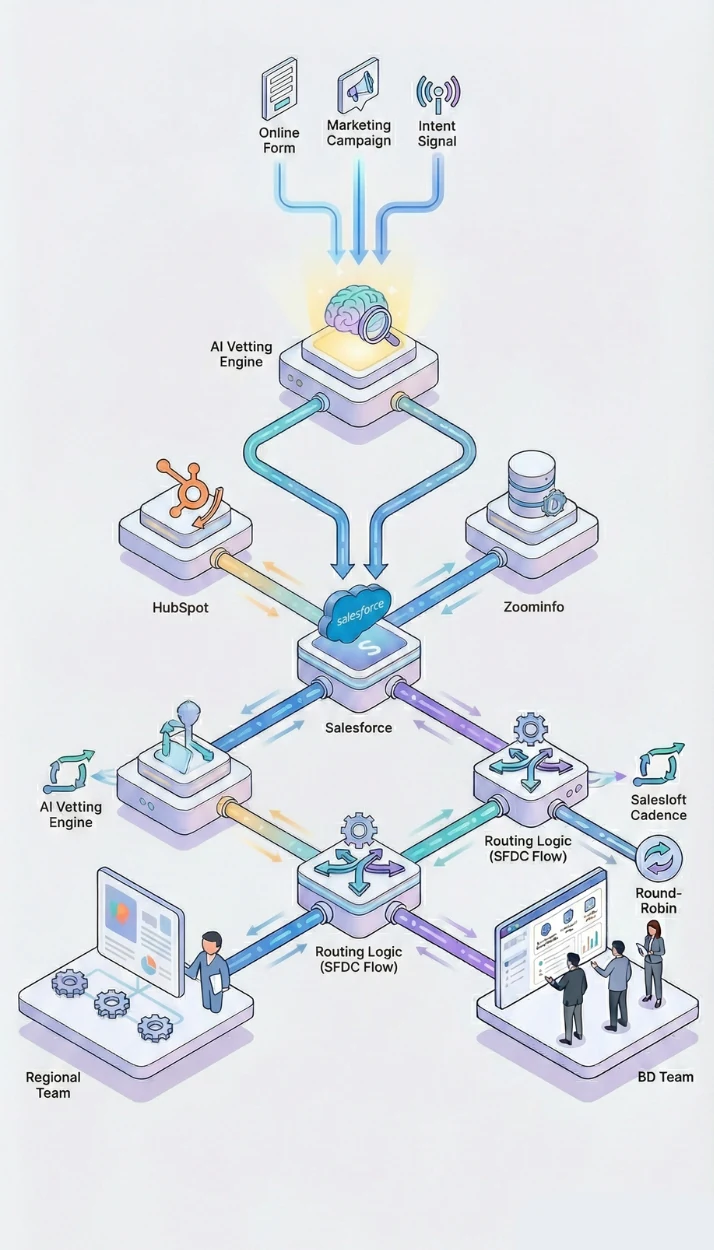
When a lead arrives, the system interprets unstructured details that rules-based automation cannot handle well: business description, domain quality, missing fields, category clues, and lightweight company context. That interpretation is combined with engagement data from HubSpot and firmographic details from ZoomInfo to produce structured, CRM-ready signals.
Those signals then flow into Salesforce, where routing logic assigns the lead to the correct regional team, triggers round-robin rules, and places the record into the right Salesloft cadence. BD teams receive leads with context already surfaced, which means less research time and faster conversations.
This project matters because it turned qualification from a manual bottleneck into a scalable decision system.
Instead of treating AI as a research shortcut, I used it as a judgment layer that improved handoff quality, reduced operational drag, and made the entire revenue engine more responsive from the moment a lead entered the funnel.
That foundation now supports faster routing, cleaner CRM signals, and a qualification process that can keep evolving with the business.