
 Lately I’ve been reading a lot about how AI search engines (Google AI Overview, ChatGPT Answers, Perplexity) actually decide whose content to show. Ahrefs published a big study on this topic, I wanted to write down what stood out to me in a way that feels more like my own notes, the kind I’d send a friend.
The most surprising thing is: AI doesn’t care about backlinks as much as it cares whether people mention you. Even if they don’t link to you. Somehow the model seems to build trust just by seeing your name pop up in conversations. Reddit threads, Quora answers, blog comments, niche communities. These “side mentions” matter a lot more than anyone expected. If your brand name keeps showing up around a certain topic, AI assumes you belong in the answer. If no one talks about you, AI assumes you don’t exist. It’s kind of humbling. : (
Another thing I learned: AI rarely triggers on broad keywords. You almost never see an AI Overview for “shoes” or “CRM.” But you definitely see one for something like “how to structure a multi-region onboarding system for SMB teams” or “what small businesses need to pass a KYB review.” Seven-word questions and longer—that’s where AI steps in. So content now needs to read more like humans talking to the model, not like traditional SEO pages trying to win a short tail keyword war.
And AI really likes structure. Not fancy writing.
It likes when you basically do its job for it: ask a question, answer directly in the first sentence, and then explain the details. Tables, lists, anything clean and easy to extract. It’s not romantic writing, but when you think about how a model “reads,” it actually makes sense. It wants to grab the part that sounds like a textbook answer.
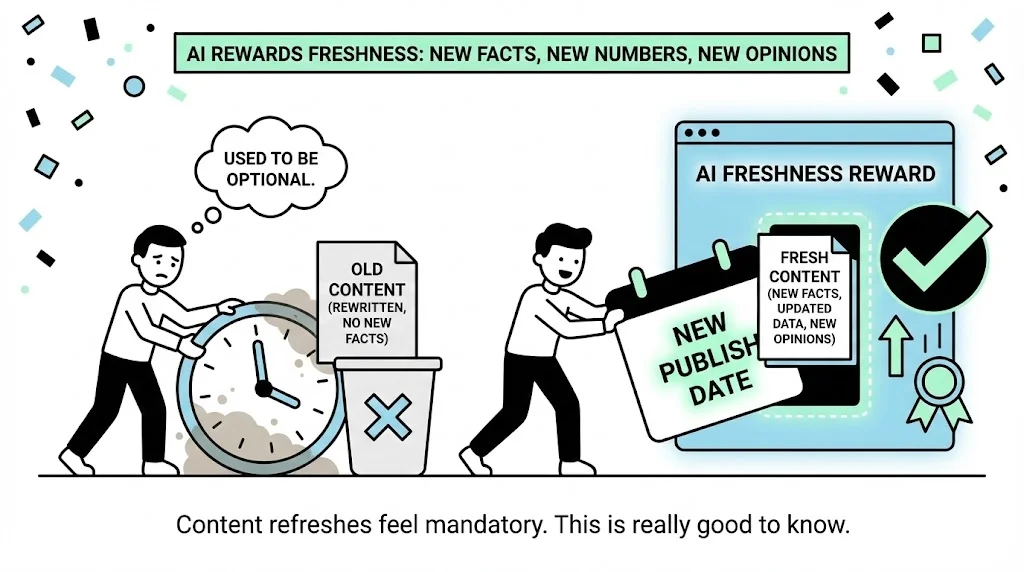
Something else that keeps coming up is freshness. AI (apparently) really cares about recent content. Not “recent” as in rewritten for the tenth time with two words changed. It wants to see new facts, new numbers, new opinions. And it rewards content with visible updates, new publish dates, updated data, even minor revisions. I used to treat content refreshes as something you do when you run out of ideas; now it feels mandatory. (BUT this is really good to know)
What really surprised me is how differently AI platforms choose sources. Google loves Reddit and YouTube. ChatGPT loves big-name news organizations. Perplexity loves niche experts and vertical blogs.
So there isn't anything one strategy fits all. If your audience leans technical, Perplexity will probably pick you up sooner than Google ever will. If your brand shows up a lot in user conversations, Google AI will treat you well even if your backlink profile is nothing special.
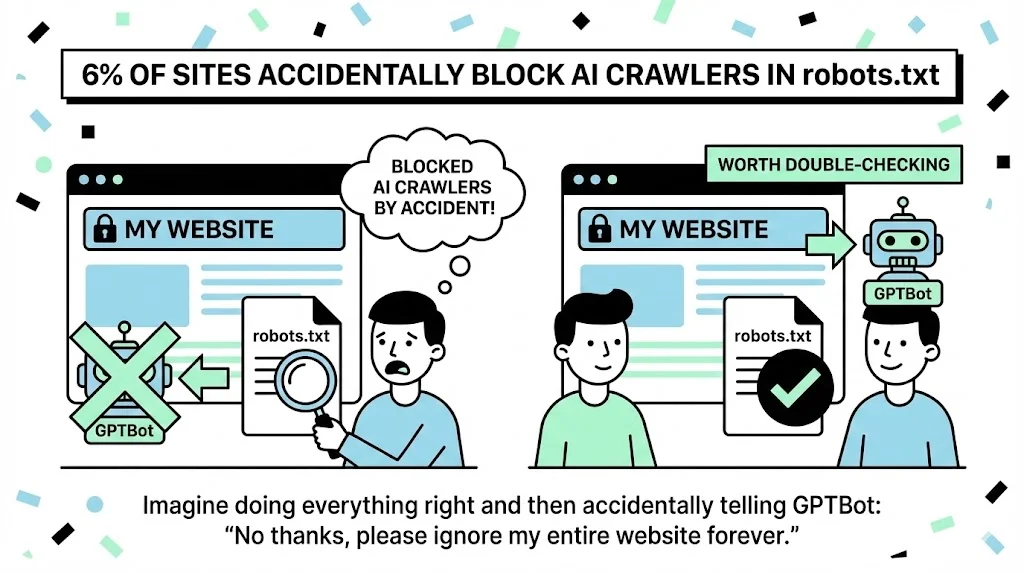
One funny (and slightly terrifying) detail: some websites literally block AI crawlers in robots.txt without knowing it. About 6% of sites, according to the study. Imagine doing everything right and then accidentally telling GPTBot: “No thanks, please ignore my entire website forever.” Worth double-checking.
If I had to boil everything down into something practical for myself, it’s probably this:
- be mentioned more often
- answer real questions people actually ask
- make the structure easy for machines to read
- refresh things more often than my old SEO brain thinks is necessary
The shift from SEO to GEO feels less like a new trick and more like a mindset change. AI search doesn’t want the best “optimized” content; it wants the clearest, most referenced, most up-to-date explanation from someone who seems to know what they’re talking about. It cares about authority in a way that feels more human than I expected.
Anyway, these are just my notes (half reminder, half reflection). If you’re also figuring out AI search, hopefully this gives you a sense of what’s actually changing and why the old rules don’t map cleanly to this new world.
Frequently Asked Questions
What is AI search optimization?
AI search optimization is the practice of making content easier for systems like Google AI Overviews, ChatGPT, Perplexity, and Gemini to understand, extract, and cite. It combines clear structure, topical authority, and current information so the page can be used directly inside an AI-generated answer.
Does AI search still depend on traditional SEO?
Yes. Traditional SEO still matters because indexing, crawlability, topical relevance, and search visibility all influence whether a page is even discovered. The difference is that AI search also rewards clean answer blocks, stronger entity signals, and content that is easier to quote or summarize.
What type of content gets cited most often in AI answers?
Content that performs best usually answers a specific question quickly, uses headings and lists that are easy to extract, stays current, and demonstrates authority through practical detail. Pages that read like a direct explanation rather than a vague opinion piece are easier for AI systems to reuse.
Related Expertise
If this topic overlaps with your work, these service pages show the operating systems behind it.
Related Reading
Explore a few connected notes if you want to go deeper on this topic.