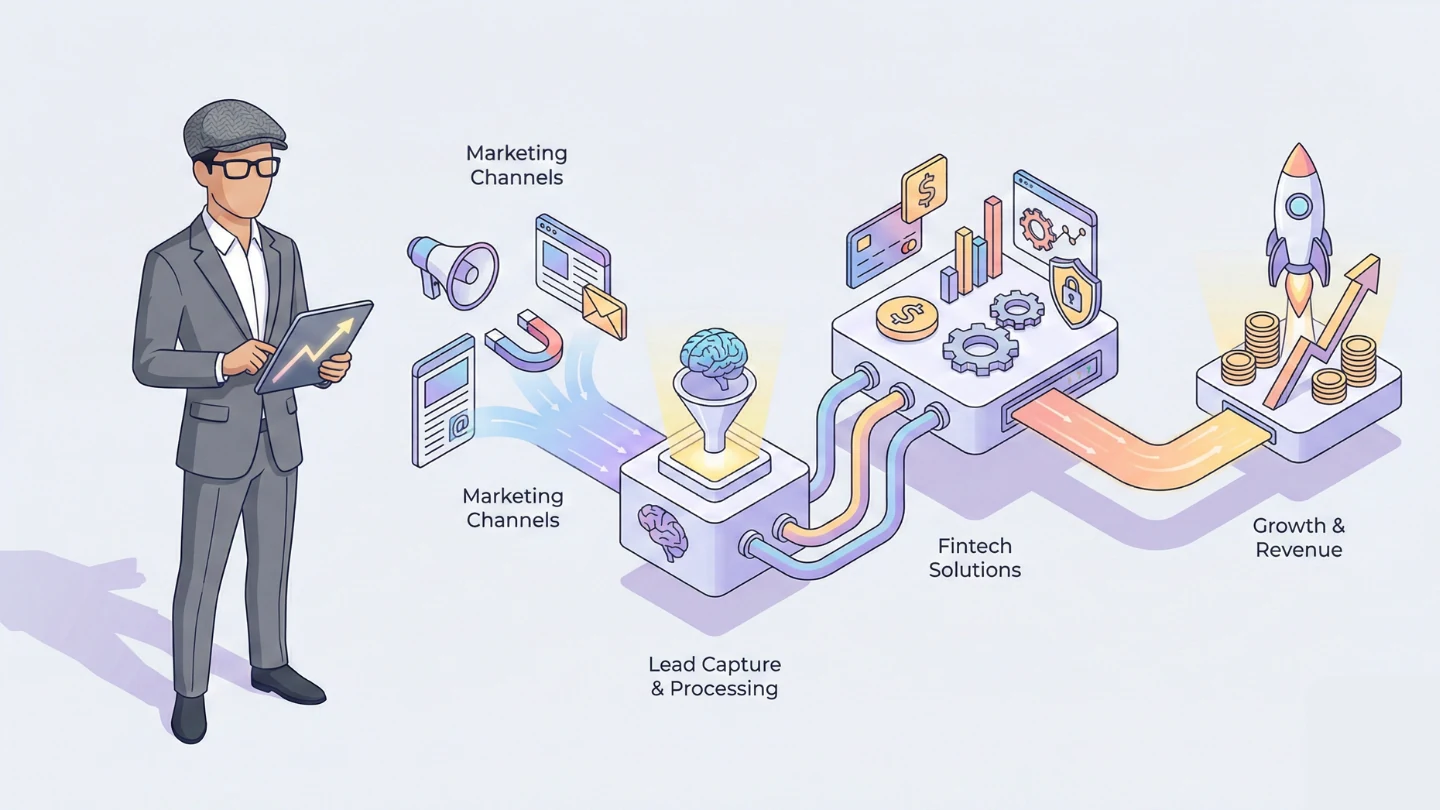
The foundation was a unified scoring and routing system in HubSpot and Salesforce that connected paid acquisition signals, firmographic enrichment from ZoomInfo and 6Sense, and product behavior data. When a lead came in, the system automatically scored it, enriched it, and routed it to the right team — whether that was a self-serve onboarding path, an SDR queue, or a BD rep managing an enterprise relationship.
On the acquisition side, I ran coordinated paid programs across Google, Meta, LinkedIn, and programmatic — each mapped to intent tier and funnel stage, not just audience size. On the lifecycle side, automated nurture sequences adapted by segment, region, and onboarding completion signal.
The result was a demand system where every channel, workflow, and sales touchpoint reinforced the same motion — from first click to activated account.
A strong fintech demand engine usually combines four motions that need to work together:
Content and education, to build trust early.
Performance marketing, to capture active demand by use case, vertical, and region.
Lifecycle automation, to move prospects through onboarding and reduce abandonment.
Sales alignment, so BD and sales receive qualified accounts with context, timing signals, and clear next steps.
The key is consistency. I connect these motions through shared scoring, enrichment, routing, and reporting so North America, Europe, and Southeast Asia can operate on the same framework while still adapting execution locally.
That is what turns demand generation from campaign activity into a repeatable revenue system.
We worked closely together rolling out a new part of the business, and I was constantly amazed not only by his technical project management skills, but also by his ability to keep the team motivated through the inevitable challenges. For any company or team that needs a proven Marketing Manager with a get-it-done-with-a-smile approach, Daniel is your guy!
Daniel has a great track record in the fast-paced environment and has proven his self as an individual who focuses on multi-tasking while balancing the need s and goals of the company. He is intelligent, willing to learn, and is a hard-working performer amongst his peers at Tolocal. Finally, he does what he says he will do because his word is guaranteed. This is a unique and powerful combination of skills and experience.
Working with Daniel has been a highlight in my career in fin-tech. He is an extremely diligent worker whose attention to detail is matched by his understanding of how the details affect the bigger picture. I hope to work with Daniel again in my career. Together we were a winning team and I count him as a life-long friend.
$2M → $76M payment volume in year one, scaling past $250M+ by year two, driven by integrated demand programs across paid acquisition, lifecycle, and sales alignment.
3 regional markets (NA, EU, SEA) running on a shared demand system with localized execution — same scoring model, same routing logic, adapted messaging and channel mix per market.
35% increase in product utilization from lifecycle automation that reduced onboarding abandonment and accelerated account activation post-signup.
40% reduction in unqualified leads reaching sales after implementing AI-assisted scoring and enrichment-based routing in HubSpot and Salesforce.