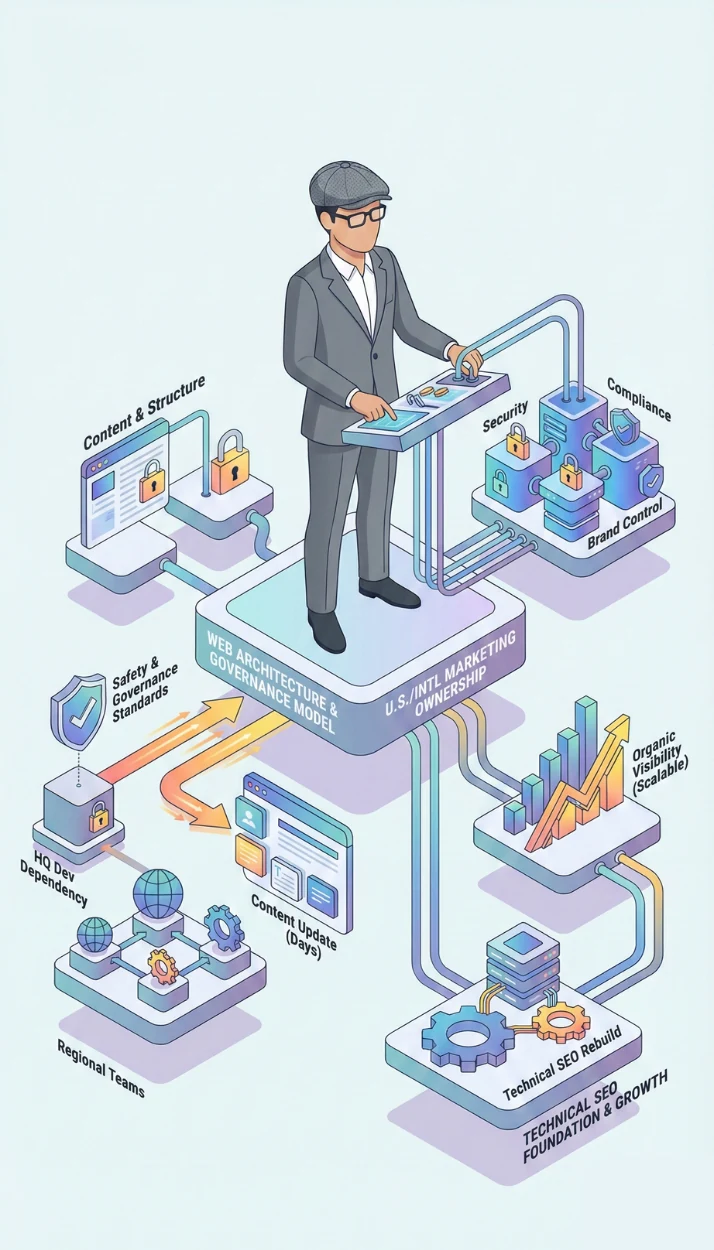
Moving from an HQ-controlled codebase to a Webflow platform the regional team could ship in days instead of weeks.
When I joined the company, the North America site lived entirely inside a headquarters-controlled custom codebase. Even small edits had to wait for central developer sprint cycles, which meant campaign pages, PR updates, and product messaging often took four to five weeks to publish.
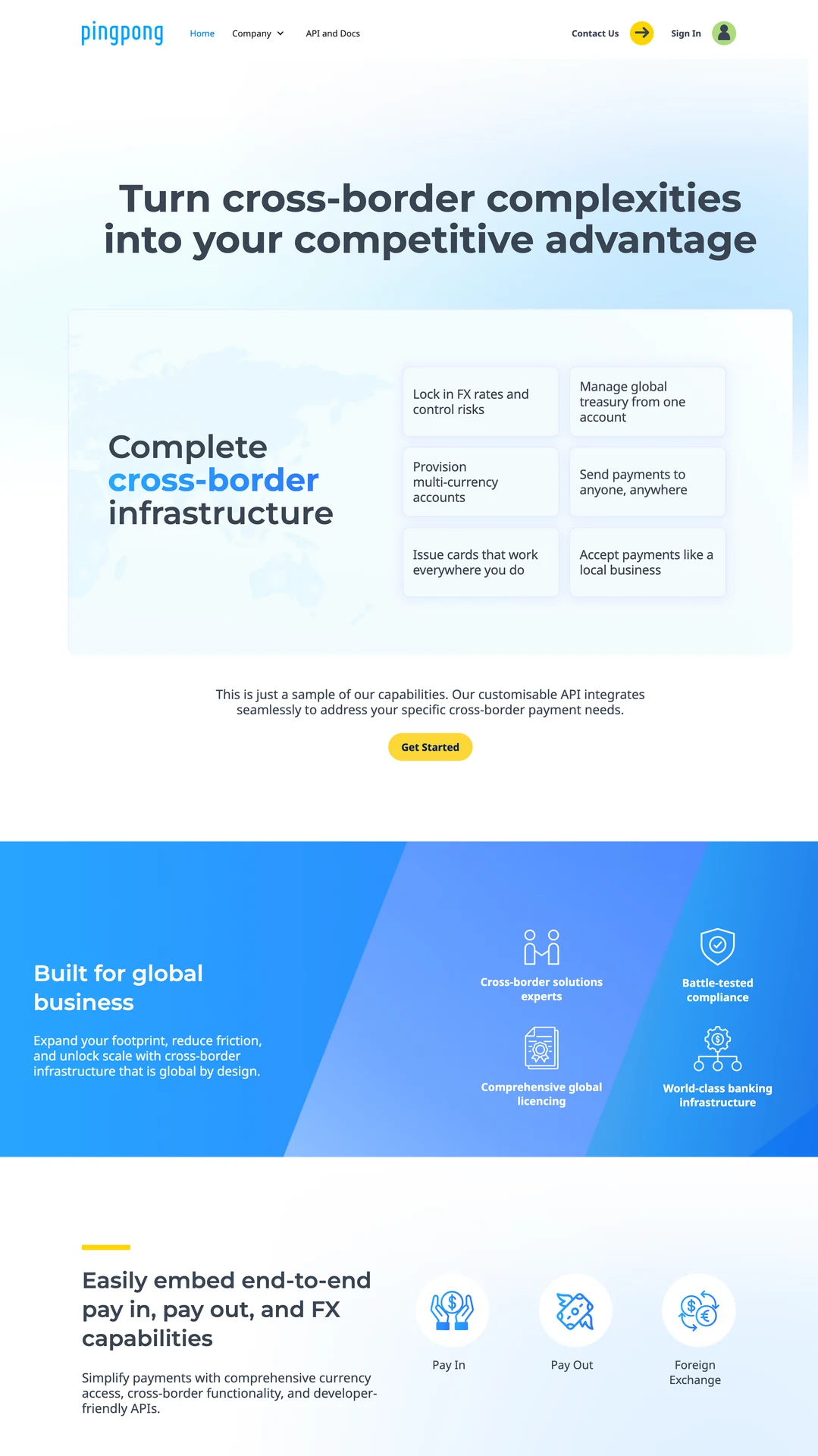
The friction was not just operational. The blog ran on a separate subdomain with an outdated CMS, which diluted SEO value and made content publishing harder than it needed to be. For a fintech business serving SMB, partner, and enterprise audiences across regions, the web stack had become a structural bottleneck.
The assignment was bigger than a redesign. We needed a platform and governance model that would give the regional team speed without giving up compliance, control, or search performance.
The rebuild followed a structured migration plan rather than a cosmetic redesign. I reworked the information architecture for a unified international site, consolidating multiple regional properties into one clearer structure.
Working with a U.S.-based UI/UX designer, I defined the sitemap, core templates, and page hierarchy for products, solutions, compliance, and resources so the first 30-plus pages could scale from a small reusable system.
At the same time, I coordinated with HQ IT on DNS, IP redirection, launch timing, and redirect mapping. By the time we cut over, the templates, governance model, and migration paths were aligned, which made the launch smoother across systems and regions.
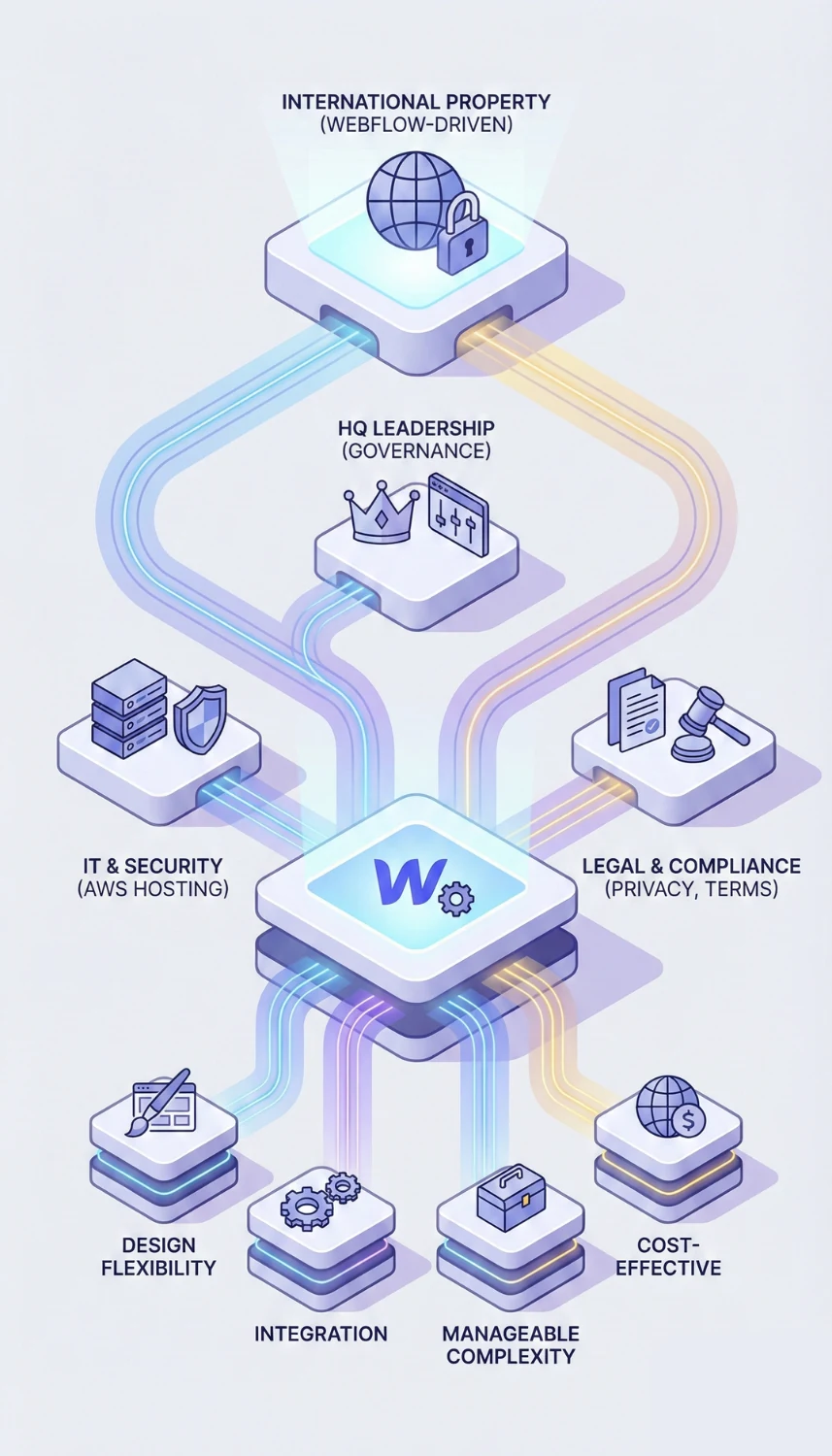
I evaluated the platform options and chose Webflow because it balanced speed, control, flexibility, and maintainability for a multi-region marketing site.
But the harder part was stakeholder alignment. IT needed confidence in the security model, legal and compliance needed precise control over policy and disclosure language, and HQ leadership needed visibility into how the regional team would operate the site. I translated Webflow’s infrastructure and permission model into a governance framework they could trust.
That governance layer is what made the rebuild viable. It let us move from a centrally coded site to a Webflow-based operating model without creating the usual fintech anxiety around ownership and risk.