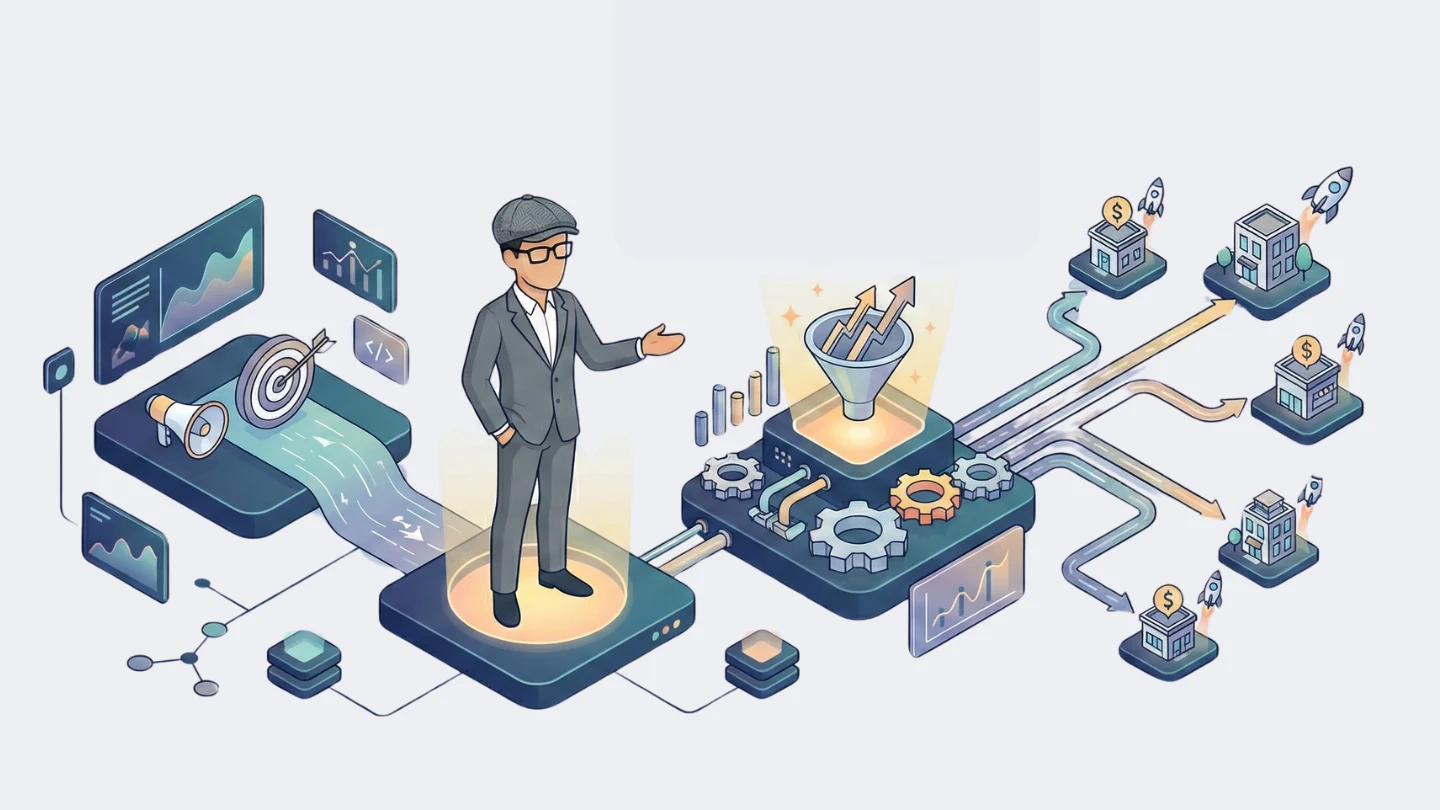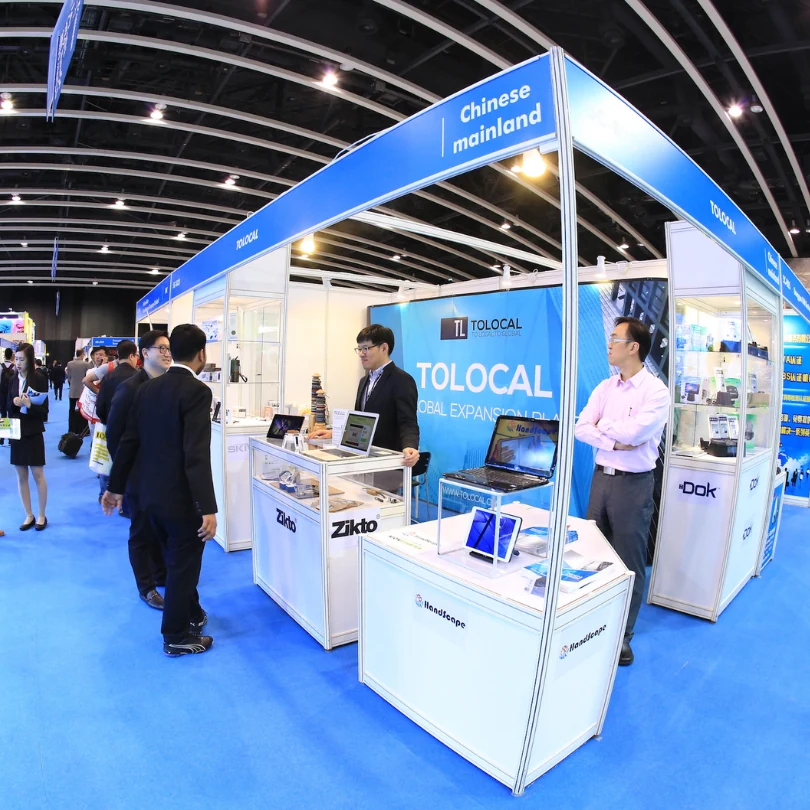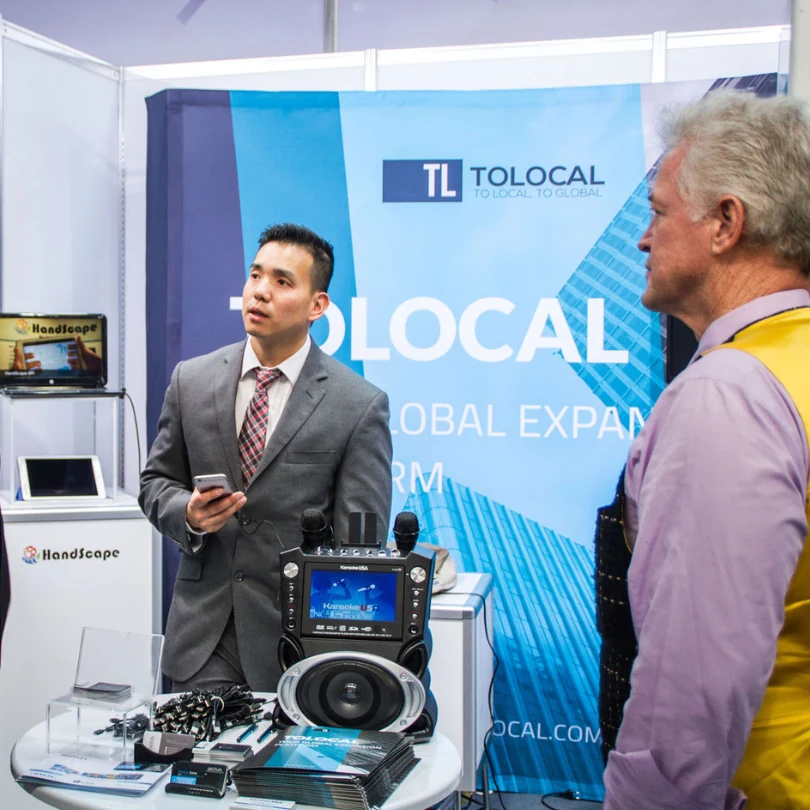
A shared event process for lead capture, follow-up, and marketing-sales coordination.
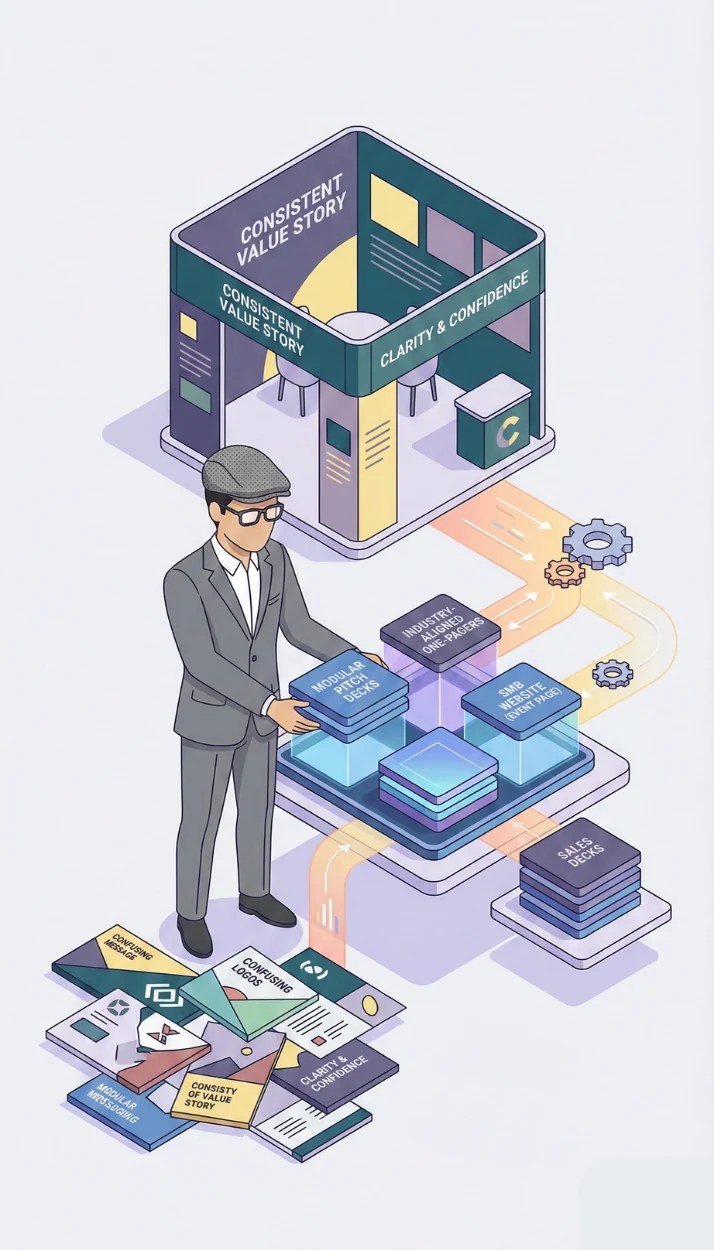
Before touching automation, product marketing and I rebuilt the narrative and asset system around events.
The team had been showing up to different events with different decks, one-pagers, booth materials, and talking points. For SMB audiences, that inconsistency weakened trust. We created a more unified event structure: a shared message framework, event-specific landing pages, modular sales decks, and supporting collateral that reflected the same story across channels.
That gave sales a cleaner setup before the event even started. Instead of improvising, they could work from materials designed for the audience in front of them.
Once the event system was in place, I built post-event nurture sequences in HubSpot so follow-up did not depend on memory or manual effort. Leads received timely thank-you emails, relevant educational follow-up, and coordinated retargeting based on interest and behavior. Engagement signals flowed back into Salesforce so sales could see which contacts were warming up and which accounts deserved faster follow-up.
That meant the team returned from events with momentum already preserved, not a pile of cards waiting to be sorted.
The biggest operational gap was lead ingestion.
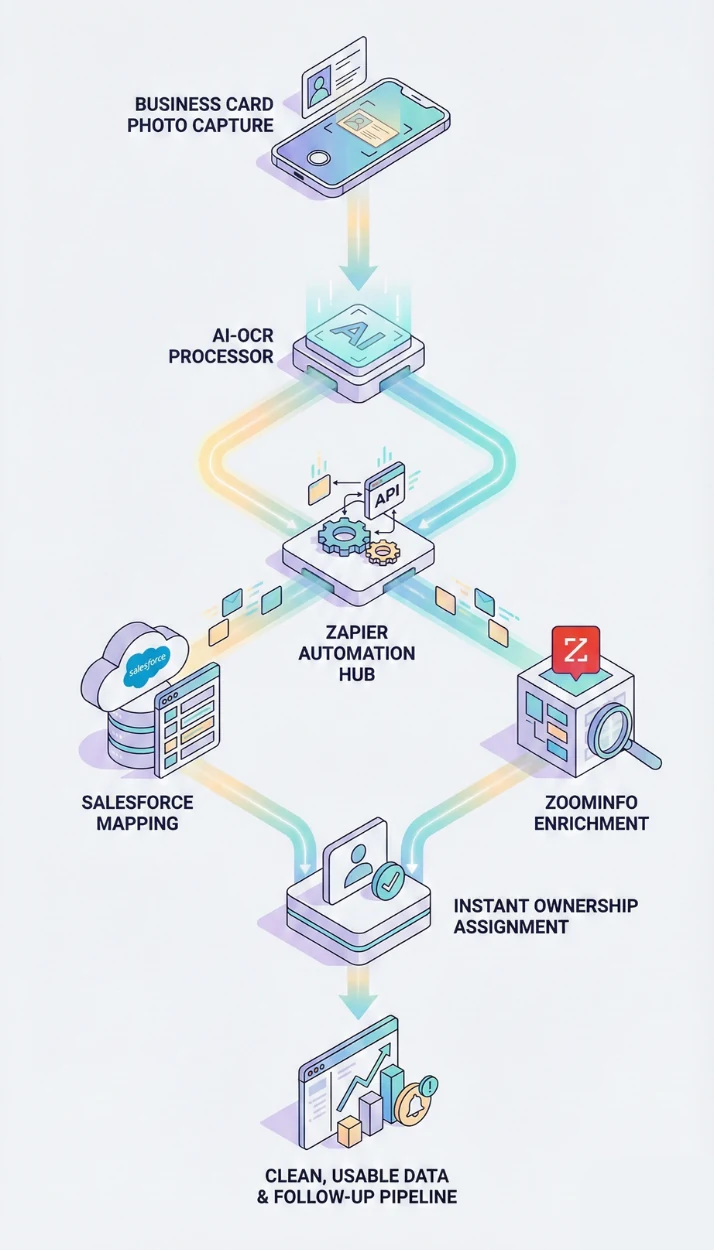
I replaced manual upload and redistribution with an automated capture flow. Reps could photograph a business card, AI OCR extracted the data, Zapier mapped it into Salesforce, ZoomInfo enriched the record, and ownership was assigned within minutes.
That mattered because event leads lose value fast. Faster capture meant cleaner data, quicker follow-up, and a much more professional handoff to sales.
Offline events only become a dependable growth channel when follow-up, capture, and reporting are as operational as the booth itself.
This project showed that trade shows can produce cleaner SMB pipeline when messaging, lead capture, enrichment, nurture, and ownership all work as one system instead of disconnected event tasks.
That is the kind of growth work I like most: taking a noisy channel, giving it structure, and turning it into something the business can trust and repeat.