Connecting ICP testing, account signals, nurture, and automation so outbound could scale with more precision.
SMB outbound in fintech is messy by default.
Relevant accounts sit across many verticals, business models, and regions. Eligibility changes by market. Contact data comes from multiple sources, including ZoomInfo, trade shows, niche directories, and import-export databases. At the same time, Salesforce and the company’s internal product CRM were disconnected, which meant marketing and sales were often working from different versions of account reality.
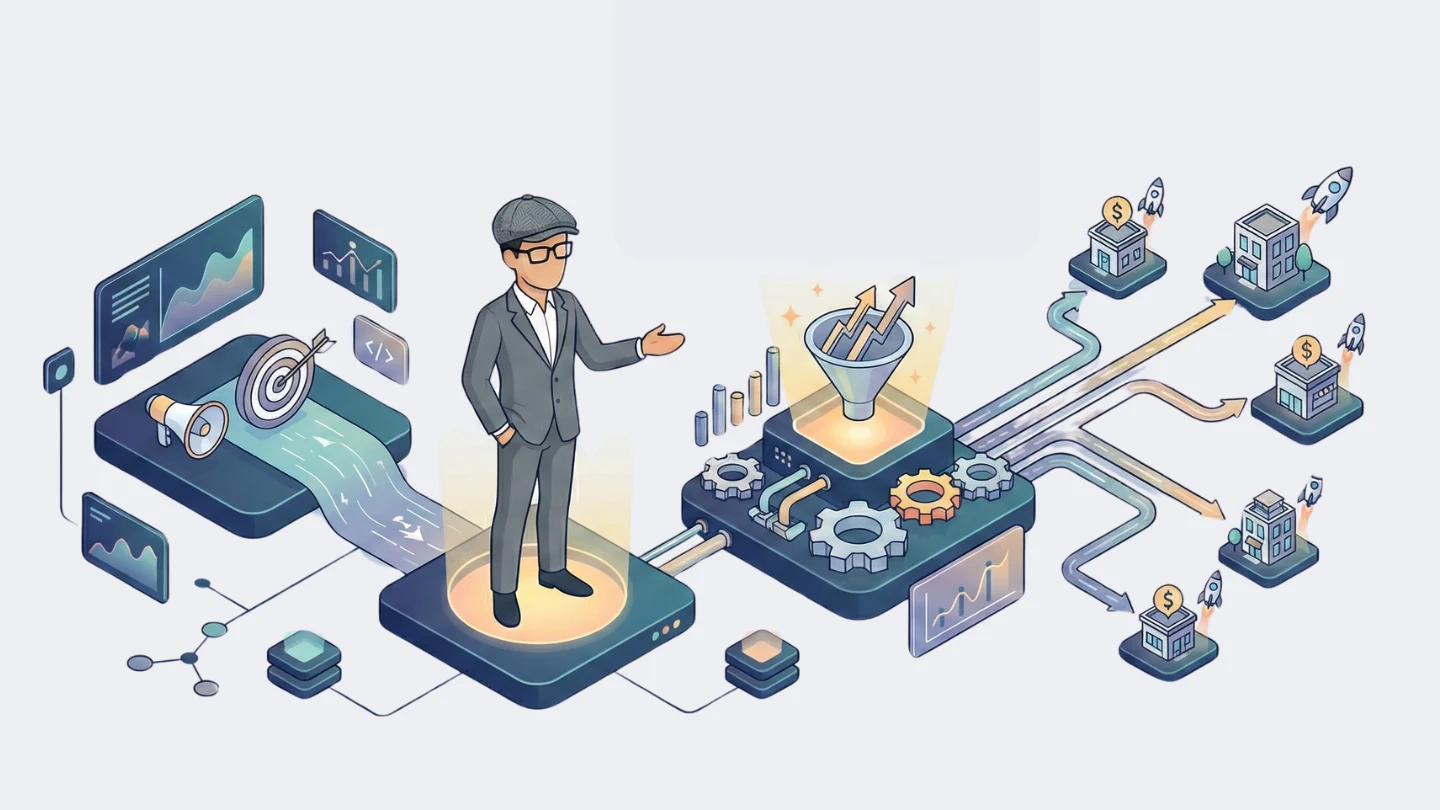
To scale outbound, we needed more than better lists. We needed a hybrid engine that combined ICP testing, account signals, nurture, retargeting, and CRM automation into one operating model.
Building the outbound engine required close coordination across sales, marketing, product, and engineering.
I worked with the sales director to define vertical tests, cadence structure, and feedback loops so outbound could become a repeatable experiment rather than a rep-by-rep craft. Marketing supported the retargeting, nurture, and content layers that would warm cold accounts. Product and engineering helped expose internal customer and lifecycle signals so reps could see more than just contact data.
That collaboration is what made the engine durable. It reflected how the business actually operated, not an idealized outbound playbook.
To scale outbound, I built a hybrid engine that connected targeting, intent, and follow-up instead of treating them as separate motions.
We started by structuring vertical tests inside Salesforce, defining ICP hypotheses with the sales director, and giving pilot reps shared Salesloft cadences so we could learn from performance instead of anecdotes. Once the targeting layer was stable, I added the marketing layer: ZoomInfo identified website visitors, weekly intelligence reports surfaced warm accounts, and retargeting kept relevant companies seeing the brand after the first touch.
The final piece was lifecycle unification. Using Zapier, native integrations, and API connections between Salesforce and the internal CRM, I connected account activity and customer status back into the outbound workflow. Reps no longer worked in the dark. They could see who was warming up, who was already engaged, and where faster outreach mattered most.
Outbound works better when it behaves like part of the revenue system, not a separate rep-only motion.
This project showed that SMB prospecting gets stronger when targeting, account signals, nurture, and follow-up timing are connected, so reps can work from readiness instead of guesswork.
That is the kind of outbound system I like building: more relevant, more measurable, and easier to scale than a pile of one-off rep habits.